 Skip to content


Updated 7 October 2026: Added context on the business behind an everyday pantry product.
Once upon a time, in 1930, Lucky Star Pilchards began its journey with a mission: to bring quality, convenient canned fish to South African homes. A different seafood-production model is explored in I&J’s fishing-business history.
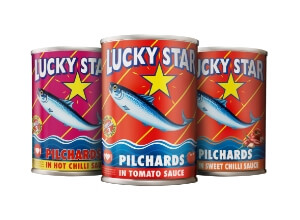
It started when the South African pelagic fishing industry imported Californian canning equipment to Walvis Bay, and by 1947, Lucky Star was producing 10 tonnes of canned fish daily. This achievement laid the foundation for what would become an iconic brand in South African kitchens.
How Lucky Star Pilchards Became a Household Name
The 1950s brought growth and change. In 1955, Federal Fish Packers acquired the “Your Lucky Star” brand, and soon after, “Lucky Star” became a registered name in South Africa.
The launch of Lucky Star Pilchards in Tomato Sauce in 1959 marked a pivotal moment, establishing the brand as a staple in South African diets. By the 1960s, Lucky Star held a strong 25% market share, with the introduction of new flavors like Hot Chilli Pilchards in 1965, further cementing its popularity.
Challenges such as overfishing in Namibia in the 1970s didn’t slow the brand down. Instead, Lucky Star adapted by importing fish to meet growing demand. Packaged-food development also takes other forms, illustrated by FUTURELIFE’s nutrition-product story.
This resilience paid off in the 1980s when the brand refreshed its look and grew to an impressive 50% market share. By 1990, Lucky Star Pilchards dominated with 68% of the market, solidifying its place as South Africa’s leading canned fish brand.

In 1998, Lucky Star joined the Oceana Group, Africa’s largest fishing company, with over 105 years of history. Listed on the JSE, NSX, and A2X, Oceana expanded the brand’s reach. Today, Lucky Star products are part of a broad network of vessels, production facilities, and distribution channels spanning 41 countries. Lucky Star’s brand timeline documents its acquisition by the Oceana Group.
Boxer: A Story of Growth, Innovation, and Community Connection
Through innovation, quality, and resilience, Lucky Star Pilchards has become more than just a canned fish brand—it’s a legacy that continues to bring flavor and nourishment to South African homes. The retail setting for everyday foods appears in Boxer’s discount-supermarket growth.
The business behind an everyday pantry product
Oceana describes a business spanning catching, processing, marketing and distribution. This wider supply chain helps explain Lucky Star’s development: the recognisable consumer brand is the part shoppers see, while production and distribution determine whether the product reaches the shelf consistently.
Canned fish differs from a freshly caught product because processing changes its storage and distribution possibilities. The customer buys a convenient meal ingredient; the business must manage supply, processing capacity, packaging and delivery to retailers. An attractive label alone cannot compensate for unreliable availability.
There is also a distinction between brand growth and the performance of the entire parent group. A group can operate several seafood businesses in different markets. Its total revenue is therefore not a direct measure of Lucky Star’s sales, and a statement about the brand’s popularity should not be converted into an unsupported market-share percentage.
The entrepreneurial lesson is to design the product and route to market together. A food producer should ask which customer occasion the product serves, how it will be stored and where shoppers expect to find it. Repeat demand becomes more valuable when the business can fulfil it without sacrificing consistency.
Source: Oceana Group’s business overview. The business interpretation in this section is Entrepreneur Hub SA’s editorial analysis.


