 Skip to content

Updated 14 October 2026: expanded with practical context and refreshed information. Original publication date retained.
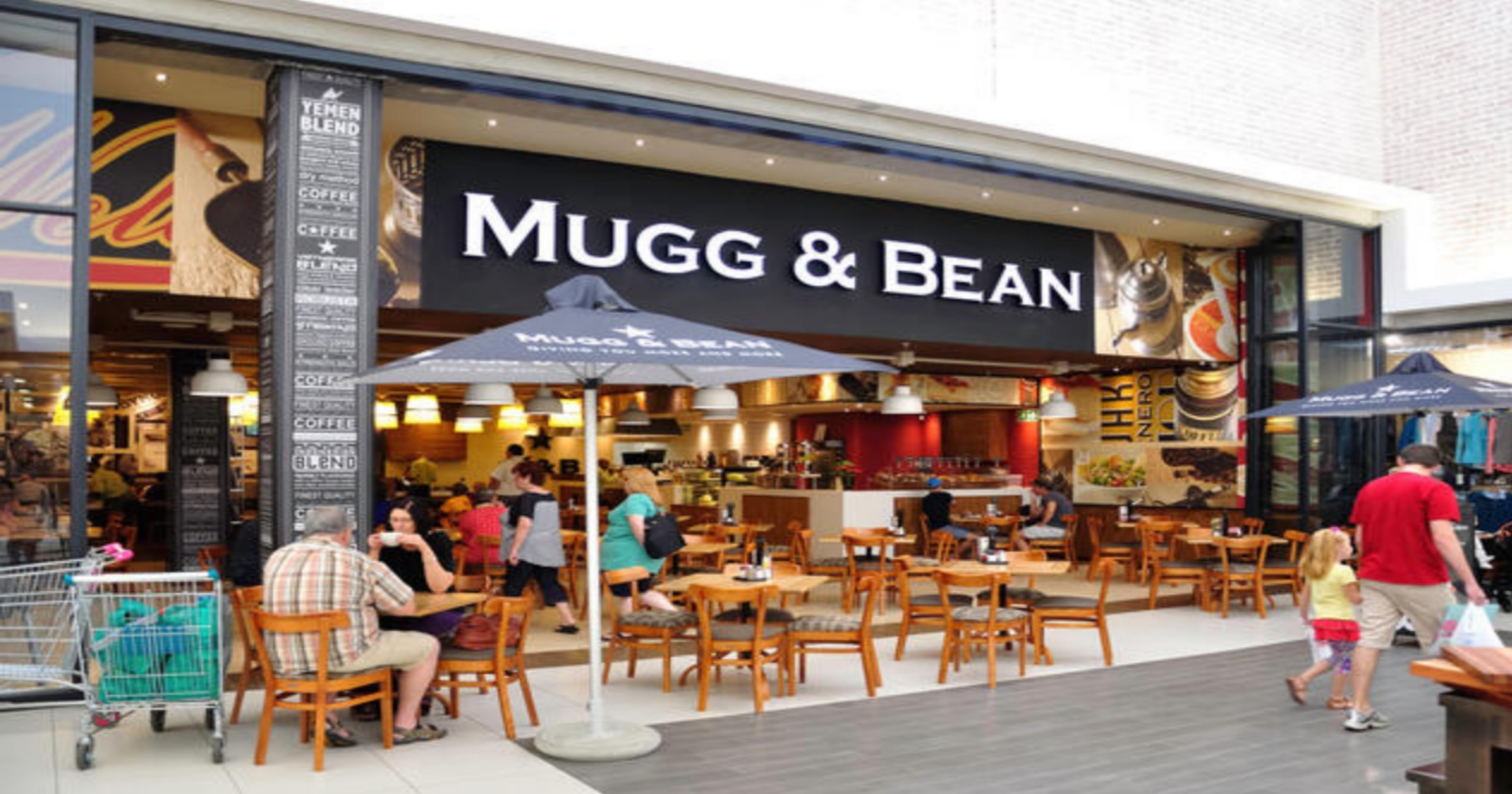
Mugg & Bean’s history begins with a coffee-shop idea that became a restaurant franchise. Ben Filmalter opened the first restaurant at Cape Town’s V&A Waterfront in 1996. Generous portions and a welcoming place to spend time became central to its positioning. Its development offers a useful comparison with the different service proposition in our Nando’s business story.

The Chicago inspiration
The brand’s own history describes a Chicago coffee shop that inspired Ben and Judi Filmalter. Ben brought the idea back to South Africa and opened the Waterfront restaurant. The account explains a source of inspiration; it does not establish that every later menu item or operating practice originated in Chicago.
The practical business question is how an idea becomes recognisable in a different market. A welcoming room, a suitable menu and service that invites repeat visits reinforce one another. Copying the appearance of a restaurant is easier than sustaining the experience through different teams and busy periods.
From a single restaurant to franchising
Franchising allowed the concept to grow beyond one owner-managed restaurant. It also required repeatable operating standards. The customer expects a recognisable experience, while individual outlets still face local rent, staffing and demand conditions.
A franchise is consequently more than permission to display a name. Its commercial model needs training, supply arrangements, quality controls and a relationship between franchisor and operator. Our Sorbet case study examines the same challenge in beauty services, where consistency depends on people as much as branding.

The Famous Brands acquisition
In 2009, Famous Brands announced the acquisition of Mugg & Bean’s South African and African business for R104 million. That is a dated transaction amount for a specified business. It is not a current valuation of every Mugg & Bean restaurant or a statement about Filmalter’s personal net worth.
Famous Brands’ 2024 brand overview places Mugg & Bean within its portfolio and repeats the brand’s founding and acquisition history. This distinguishes the founder’s contribution from the corporate ownership under which the business later operated.
What the customer promise means operationally
Generosity must be supported by pricing and production choices. A restaurant needs to understand ingredient costs, preparation time, table use and waste. A promise of value can attract repeat visits, but it is not evidence that every outlet achieves the same profit margin.
The brand’s coffee, baked products and meals create several reasons for a customer to visit. Its public menu is a better guide to a current offering than an old claim that a particular item is always bottomless or available at every format. A sit-down restaurant and a convenience outlet need not have identical menus.
Lessons beyond the restaurant floor
The case combines a clear customer proposition, franchising and integration into a larger restaurant group. For an aspiring operator, useful questions concern consistency, local demand and the economics of the actual outlet. Historical growth alone cannot answer those questions.
This account removes unsupported economic anecdotes, fluctuating outlet totals and claims that success was guaranteed. It keeps the documented origin, the customer proposition and the Famous Brands transaction. For a service business built around repeat appointments and staff training, compare Legends Barber’s growth model.
Why sit-down and On-The-Move restaurants have different economics
Famous Brands' 2025 operating review describes a focus on Mugg & Bean's On-The-Move format and identifies coffee-price pressure affecting the brand. These are dated operating details that add to the original founder and acquisition story, without suggesting every format has the same menu or cost structure.
A sit-down restaurant uses tables, service staff and a broader dining experience. A takeaway format places more emphasis on access, order speed and packaging. Both may serve coffee, but they do not necessarily use the same premises, staffing pattern or customer occasion.
For an illustrative café, a R30 beverage with R12 direct costs contributes R18 before fixed expenses. If a takeaway channel adds R3 packaging cost, that contribution falls to R15 at the same price. These are hypothetical numbers, not Mugg & Bean prices or margins; they show why changing the format changes the calculation.
The practical lesson is to cost the customer occasion and channel. Track order mix, service time and waste rather than judge the business only by the brand or number of outlets. A familiar customer promise can support several formats, while each still needs an operating model that fits its location.
Source and further reading: Why sit-down and On-The-Move restaurants have different economics — reference.


