Skip to content

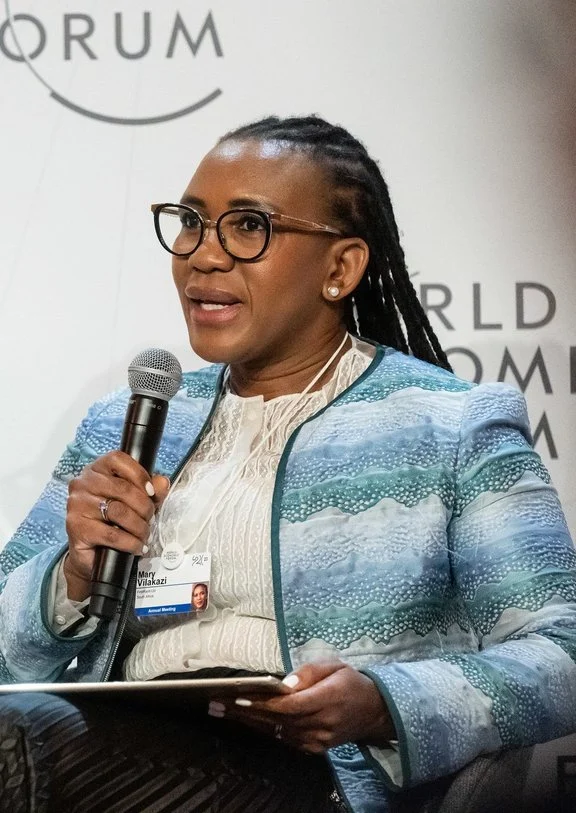
Mary Vilakazi’s salary as FirstRand’s CEO in 2024—R40.55 million—grabbed attention, not just for its scale but for what it reveals about leadership in South Africa’s banking sector. As the first woman to lead Africa’s largest bank by market value, her pay reflects her pivotal role and FirstRand’s standout performance.
This article dives into her compensation, its context, and actionable lessons for professionals navigating executive pay. From benchmarking salaries to decoding incentive structures, readers will find practical insights to apply in their careers or businesses.
Mary Vilakazi’s Salary: A 2024 Breakdown
Mary Vilakazi’s salary in 2024, totaling R40.55 million ($2.21 million), highlights her impact as FirstRand’s CEO. She assumed the role on April 1, 2024, after serving as chief operating officer since 2018. Her compensation package breaks down as follows:
- Base Salary: R9.4 million ($504,277), covering her fixed pay.
- Short-Term Incentive: R14.55 million ($781,047), tied to FirstRand’s strong performance in the first eight months of her tenure.
- Long-Term Incentive: R16.6 million ($891,202), reflecting her strategic contributions and commitment to sustained growth.
This structure—22.1% base salary and 77.9% bonuses—aligns with industry norms for top executives, where performance-based pay dominates. Compared to her 2022 compensation of R32.74 million as COO, her 2024 package as CEO marks a 23.8% increase, driven by her expanded responsibilities and FirstRand’s headline earnings of R24.81 billion in fiscal 2024.
Historical Trends in Vilakazi’s Compensation
Vilakazi’s pay has climbed steadily, mirroring her growing influence. In 2022, as COO, she earned R32.74 million, up 21.32% from R26.99 million in 2021. The 2022 package included a base salary of R7.93 million and a short-term incentive of R10.81 million, rewarding her role in FirstRand’s financial achievements. By 2024, her CEO compensation reached R40.55 million, reflecting her historic appointment and the bank’s continued dominance.
This trajectory aligns with South African executive pay trends, where top banking CEOs often see double-digit increases tied to metrics like earnings growth and shareholder value. Vilakazi’s 2024 pay, while significant, falls within the R40–60 million range estimated for peers like Nedbank’s Jason Quinn, though below Standard Bank’s Sim Tshabalala at R89.2 million.
FirstRand’s Performance Under Vilakazi
FirstRand’s 2024 success provides context for Vilakazi’s pay. The bank reported headline earnings of R24.81 billion ($1.33 billion), reinforcing its position as South Africa’s leading financial services provider. Vilakazi’s leadership emphasized diversifying revenue, particularly in insurance and investment management, while expanding into East African markets like Kenya. Her strategic oversight as COO and CEO helped FirstRand navigate challenges like South Africa’s 1% GDP growth and a UK motor finance ruling requiring a R3 billion provision.
Her ability to maintain stability amid economic headwinds—currency fluctuations, high interest rates, and load-shedding—justifies the performance-based portion of her pay. FirstRand’s portfolio, including FNB, RMB, WesBank, and Aldermore, delivered consistent growth, with a double-digit dividend increase satisfying investors. Vilakazi’s 0.008% stake in FirstRand, valued at R35.93 million, ties her wealth to the bank’s long-term success.
Gender and Diversity: Vilakazi’s Historic Role
Vilakazi’s appointment as FirstRand’s first female CEO, and the first woman to lead a major South African bank since Maria Ramos at Absa, marks a milestone for gender diversity. She’s also the second Black CEO after Sizwe Nxasana, breaking barriers in a male-dominated industry. Her journey—from Alexandra township to chartered accountant at PwC, to deputy CEO at MMI Holdings, to FirstRand’s COO—shows resilience. Despite giving birth in high school, she earned a Bachelor of Commerce and Honours at the University of the Witwatersrand, becoming one of PwC’s youngest partners in 2005.
Her 2024 Greg Boyd Award from the Association of Black Securities and Investment Professionals underscores her commitment to transformation. Vilakazi prioritizes building a diverse leadership pipeline, naming successors like Emrie Brown at RMB and Lytania Johnson at FNB’s personal segment. Her leadership challenges South Africa’s gender pay gap, where women earn 23–35% less than men on average, though executive-level gaps are narrower.
South African Executive Pay Trends
Vilakazi’s R40.55 million salary fits within South Africa’s banking sector, where CEO pay reflects market size and performance. For comparison:
- Standard Bank’s Sim Tshabalala: R89.2 million in 2024, driven by the bank’s larger asset base.
- Absa’s Kenny Fihla: R67.2 million in 2024 at Standard Bank, likely similar at Absa in 2025.
- Nedbank’s Jason Quinn: Estimated R40–60 million in 2024, though exact figures are unavailable.
These sums tie directly to performance metrics like earnings growth, customer acquisition, and risk management. South Africa’s banking sector, a cornerstone of the economy, faces unique pressures—political uncertainty, high unemployment, and a volatile rand. Bonuses, often 70–80% of total pay, reward executives for navigating these complexities. Yet, with South Africa’s Gini coefficient among the world’s highest, such salaries spark debate. Critics, like Just Share, argue that CEO-to-worker pay ratios (often 1,000:1) fuel inequality and erode trust.
Challenges and Criticisms of High CEO Pay
High CEO salaries like Vilakazi’s face scrutiny in South Africa, where 10% of the population holds 80% of the wealth. A FirstRand bank teller might earn R150,000 annually—270 times less than Vilakazi. Critics argue such gaps strain social cohesion, especially when public sector wages stagnate. Just Share notes that excessive executive pay can deter investment and fuel unrest, citing South Africa’s 2021 riots as a symptom of inequality.
Yet, defenders of high CEO pay emphasize market realities. FirstRand competes globally, and top talent demands competitive compensation. Vilakazi’s pay, while large, reflects her role in managing a R1.81 trillion-asset bank. Balancing fairness and market demands remains a challenge, with no easy answers.
100 Most Profitable Businesses in South Africa
Applying Vilakazi’s Lessons to Your Career
Mary Vilakazi’s salary—R40.55 million in 2024—offers more than a headline. It’s a window into executive compensation, gender diversity, and South Africa’s banking sector. Professionals can use her example to benchmark their own pay, negotiate smarter, and advocate for equity. Businesses can learn to align incentives with performance while addressing inequality. Start by exploring salary data, understanding your company’s financials, and building skills to thrive in a volatile economy. Vilakazi’s journey shows what’s possible with resilience and strategy.
Get the latest entrepreneurial success stories, expert tips, and exclusive updates delivered straight to your inbox — Sign up for Entrepreneur Hub SA’s newsletter today!