 Skip to content


Updated 7 October 2026: Added context on turning an atchar idea into repeatable orders.
Starting a business without money? Sounds impossible, right? But Musi Modikwe did exactly that. In the middle of the 2020 lockdown, when most people were worried about job security, he saw an opportunity. His journey proves that resourcefulness and persistence can trump financial limitations. Another atchar entrepreneur’s route into retail is Amina Abrahams’ business journey.
The Moment That Sparked It All

During a live Instagram session, Musi Modikwe and a fellow entrepreneur were sharing business insights, hoping to inspire others in tough times. A comment from a viewer caught his attention:
“In the land that we live in, without connections and funding, you’ll never make it in business.”
Instead of being discouraged, Musi took this as a challenge. He wanted to prove that success wasn’t solely about who you knew or how much capital you had—it was about taking action.
From Atchar To A Business Empire

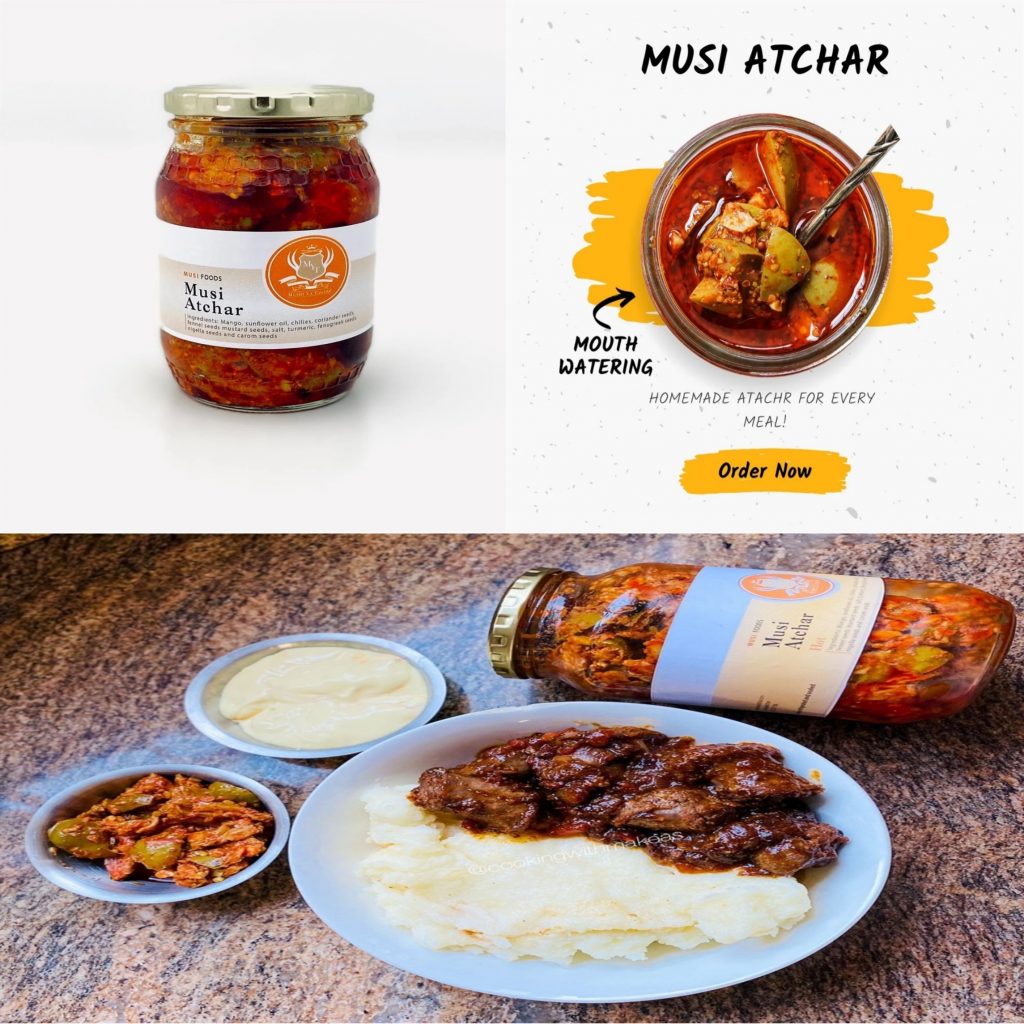
That same evening, he watched his mother, Sibeka, making atchar as a hobby. That’s when it hit him. Why not turn this homemade product into a business? With his knowledge of eCommerce and online marketing, he realized he didn’t need a physical store or large startup capital.
So, Musi Foods was born. He handled the social media marketing while his mother took charge of production. Developing food distribution relationships also features in Mikie Monoketsi’s spices-and-herbs story.
Leveraging Social Media To Scale
Without money for advertising, Musi got creative. He reached out to influencers, offering them a bottle of atchar (retailing at R99) in exchange for a post on their Instagram stories. The response was overwhelming. Within months, the business had scaled to six figures.
Lessons From Musi Modikwe’s Success
Musi Modikwe’s journey is packed with valuable insights for aspiring entrepreneurs:
- Use what you have – He leveraged his mother’s skill and his knowledge of online business to create a viable product.
- Be resourceful – Instead of waiting for funding, he used influencer marketing to generate traction without upfront costs.
- Take action – Many people have great ideas, but execution is what sets successful entrepreneurs apart.
Musi Modikwe’s story proves that determination and smart strategies can turn even the simplest idea into a profitable business. If he could do it with just atchar and an Instagram strategy, what’s stopping you? Food For Mzansi’s interview with the atchar entrepreneur provides further context on the product and early customer-building approach.
For more South African founder and business-growth stories, read Levi Mnguni, Tebogo Ditsebe and Lekau Sehoana Biography. The wider principles behind this kind of focused venture are discussed in how small businesses compete with corporations.
Turning an atchar idea into repeatable orders
The atchar example in Musi’s story is useful because it begins with a product customers already understand. The challenge is therefore not only explaining a new concept; it is giving buyers a reason to choose this supplier and come back. The reported early results are part of the founder account, not audited evidence of continuing income.
A small food venture needs to connect recipe consistency, portion size, packaging and price. If one batch tastes or weighs differently from another, the customer cannot rely on the original experience. Recording quantities and costs makes it easier to repeat the product and identify where a margin is being lost.
Order collection is another practical step. Selling informally through messages can work at first, but a simple record of quantities, payment and delivery commitments prevents the founder from confusing interest with a confirmed sale. Reorders are particularly useful feedback because they show whether the product solved an ongoing customer need.
The lesson is resourcefulness with a method behind it. A small launch can reduce the initial commitment, but it does not eliminate ingredient, packaging or delivery costs. Starting with limited cash makes those records more important, especially before increasing production or promising supply to a retailer.


