 Skip to content

Capitec Bank has evolved from a retail disruptor into a serious business-banking player, offering SMEs practical credit options that cover day-to-day cash flow, asset purchases, and expansion projects. For owners who want bank-backed pricing without a mountain of paperwork, the mix of a business overdraft, a medium-term loan, and vehicle & asset finance hits the right notes.
Business Funding


Add a business app, calculators, and a streamlined onboarding flow, and the bank makes a clear pitch: keep trading simple, keep costs visible, and get capital matched to the job at hand. If “funding without friction” is the goal, Capitec Bank is worth a close look.
Overview
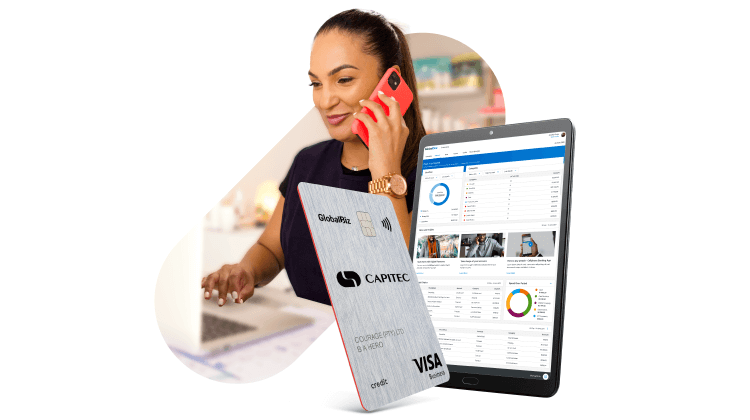
What Capitec Bank offers for businesses
- Business overdraft: revolving working capital tied to your business account.
- Business term loan (up to 60 months): medium-term funding for capex, renovations, balance-sheet restructuring, or acquisitions.
- Vehicle & asset finance: structured deals for passenger/commercial vehicles and equipment across manufacturing, healthcare, food processing, printing, and more.
- Property finance / merchant loan (where available): longer-tenor or turnover-linked options in the business suite.
Who it suits
- SMEs with 2+ years of operating history and consistent turnover.
- Owners who want an overdraft for seasonality plus a term facility for growth.
- Businesses looking to keep repayments aligned with asset life (asset finance) rather than straining cash flow.
Good to know
Capitec also accommodates self-employed owners on the retail side (personal-capacity loans) using business income, but the true “business” range sits inside Capitec Business with relationship support and product depth.
Features (What stands out)
- No-nonsense product menu: overdraft for working capital; term loan for projects; asset finance for vehicles/equipment.
- Clear use-case matching: each product maps to a specific job—float stock, buy a van, refurb a shop, bring an outsourced function in-house.
- Calculator support: business overdraft calculator to sanity-check potential limits and repayments before you engage a banker.
- Lean documentation: business credit emphasises core financials over bloated business plans.
- Banker + digital: apply or pre-assess online, then finalise with a business banker where needed.
Pricing & Total Cost (How to think about it)
Capitec prices business credit like most banks: a prime-linked rate plus fees, adjusted for risk, tenor, security, and your relationship. Expect three moving parts:
- Interest
- Overdrafts accrue on the used balance (not the limit).
- Term/asset finance accrues on the outstanding principal, with interest declining as you repay.
- Once-off initiation fee
- Charged at the start; factor it into your effective annual cost.
- Monthly service fee
- Small but real; include it in your cost model.
DIY cost model (quick method):
- For an overdraft, model average utilisation (e.g., 40–60%) rather than the full limit.
- For a term loan, tally total rand repayable (principal + interest + fees), then divide by project benefit (e.g., monthly incremental profit).
- For asset finance, match term to asset life; the further you stretch beyond useful life, the more you overpay.
Eligibility & Documents (What you’ll likely need)
- Entity & tenure: registered company/CC/trust/INC and typically ≥ 2 years trading for term loans (overdrafts can be more flexible).
- Turnover & cash flow: consistent inflows via a business account; management accounts that show sustainability.
- Bank statements: 6–12 months (business).
- Financials: annual financial statements; management accounts if latest AFS are older.
- Directors’ info: IDs, proof of address; personal surety is common for SMEs.
- Tax & compliance: up-to-date returns and no unresolved judgements.
- Quotes/invoices: for asset or capex deals (to prove use of funds).
Self-employed (personal-capacity) path: if you’re borrowing in your own name using business income, be ready with salary slips (if paid), bank statements, proof of trade, and—when requested—an accountant’s letter.
Speed & Process (Step by step)
- Scope the need (working capital vs term vs asset).
- Run the calculator for overdraft to see the ballpark.
- Prepare documents (statements, AFS, management accounts, quotes).
- Engage Capitec Business: submit details, confirm structure (limit/term, security, covenants).
- Credit assessment: expect affordability tests, director checks, and security evaluation where applicable.
- Accept & draw: overdraft becomes available to use; term/asset finance settles to suppliers or your account.
- Monitor & optimise: revisit pricing and limits as turnover grows.
Products in Detail
Business Overdraft
- Purpose: cover timing gaps (stock cycles, month-end payroll, VAT lags).
- How it works: reusable limit; interest only on the portion you use.
- Best practice: set a limit that fits average troughs, not the worst day of the year; keep a repayment rhythm to avoid perpetual utilisation.
Business Term Loan (up to 60 months)
- Purpose: expansion, renovations, acquisitions, insourcing, balance-sheet restructuring.
- Structure: fixed term with monthly repayments; suitable when the benefit unfolds over years (not weeks).
- Best practice: align term to benefit life; avoid using a 5-year loan for a 6-month marketing burst.
Vehicle & Asset Finance
- Purpose: vehicles (passenger to heavy commercial), machinery, medical/dental equipment, packaging/printing lines, food-processing gear, and more.
- Structure: asset-backed; deposits and residuals/balloons can reduce monthly outlay if appropriate.
- Best practice: price the all-in delivered cost (asset + insurance + maintenance + downtime risk) against the productivity gain.
Merchant/Turnover-Linked Options (where available)
- Purpose: convert future card turnover into cash now.
- Caution: convenient but can be pricier in effective terms—compare against an overdraft before signing.
Property Finance
- Purpose: owner-occupied premises or investment property (business-use).
- Structure: longer terms; security and valuations required.
User Base (Who gets the most value)
- Established SMEs that bank operationally with Capitec and want a tidy bundle: overdraft + term loan + asset finance.
- Cash-spiky businesses (retailers, distributors, hospitality) that need flexible float.
- Asset-intensive operations (logistics, manufacturing, healthcare) where equipment uptime = revenue.
- Self-employed owners who qualify in personal capacity but prefer bank-rate pricing and predictable servicing.
Advantages
- Clarity: products map to real SME problems; fewer surprises.
- Flexibility: mix revolving and term credit as your business evolves.
- Calculator + banker: easy pre-assessment plus relationship support.
- Asset appetite: wide list of financeable equipment categories.
- Scale path: upgrade limits/terms as turnover and consistency improve.
Disadvantages
- Trading history required: new startups without revenue will struggle to access business credit.
- Security & surety: personal sureties are common; be ready to sign.
- Prime-linked reality: in a rising-rate environment, service costs can climb—stress-test sensitivity.
- Turnover-linked products: convenience can raise effective cost; compare with overdraft/term loan.
Safety & Trust
- Licensed & regulated: Capitec is a registered credit provider and financial services provider.
- Data & controls: standard bank-grade security, fraud and privacy tooling.
- Accountability: business bankers to escalate issues; formal complaints channels when needed.
Application Playbooks (Examples)
1) Wholesaler bridging stock ahead of peak season
- Product: Business overdraft for 90 days.
- Inputs: 12-month sales curve; supplier lead times; historic troughs.
- Win: draw down only when needed; repay after peak; keep fees low via utilisation discipline.
2) Clinic adding a CT scanner
- Product: Asset finance with a residual to manage cash flow.
- Inputs: OEM quote, installation/maintenance SLA, projected patient throughput.
- Win: revenue from scans offsets instalments; asset serves as collateral.
3) Franchise refurb
- Product: Term loan over 36–60 months.
- Inputs: landlord approvals, contractor quotes, projected footfall uplift.
- Win: align term to the expected uplift period; review pricing annually.
4) E-commerce courier fleet expansion
- Product: Asset finance for light commercial vehicles; small overdraft for fuel/tyres.
- Inputs: route density, downtime assumptions, insurance.
- Win: separate capex from working capital to keep float healthy.
How Capitec Bank Compares (Quick Context)
Against big-four banks (FNB, Absa, Standard Bank, Nedbank):
- Similar core products; often leaner UX and fee clarity.
- Relationship depth grows as you migrate day-to-day banking to the business account.
Against alternative lenders (Lula, Bridgement, Merchant Capital):
- Alternatives can be faster for pure working capital and early-stage SMEs, sometimes with lighter docs—but at a higher effective cost.
- Capitec Bank suits SMEs with a trading history that want bank-rate pricing, overdraft discipline, and asset-finance depth.
Against marketplaces (FundingHub):
- Marketplaces collect multiple quotes quickly. If you already prefer a single-bank relationship and plan to add assets/property later, staying within Capitec Bank can simplify covenants and pricing reviews.
Pricing Scenarios (Step-by-step sanity checks)
Overdraft example
- Choose a limit that covers your typical cash trough, not your worst hypothetical day.
- Model average utilisation (e.g., 50%).
- Add initiation and monthly fees to the interest cost; that’s your effective monthly drag.
- If drag > expected margin from extra sales, shrink the limit.
Term loan example
- Calculate total rand repayable over the full term.
- Divide by the incremental monthly profit from the project; target a healthy payback window.
- Stress-test with a +2% rate move.
Asset finance example
- Price the full productivity gain (output/hour, reduced downtime).
- Add insurance/maintenance to instalments.
- Align term to useful life; consider a modest residual only if resale values are reliable.
Alternatives (When Capitec Bank isn’t a fit)
- Brand-new startups: look at grants, supplier credit, PO finance via specialised funders, or startup-oriented alternative lenders.
- Very urgent micro-needs: alternatives may approve same-day with higher cost; refinance with a bank facility once revenue stabilises.
- No surety appetite: expect tighter limits and higher pricing anywhere; consider invoice-backed facilities if your debtors are blue-chip.
FAQs
1) Does Capitec Bank offer business overdrafts?
Yes—linked to your business account, with interest charged only on the used portion.
2) What is the maximum term on a business term loan?
Up to 60 months, subject to assessment and purpose.
3) Can I finance vehicles and equipment?
Yes—vehicle & asset finance covers commercial vehicles and a wide range of equipment categories.
4) Do I need a business plan?
Capitec focuses on trading history, cash flow, and financial statements; you won’t be blocked by a lack of a glossy plan.
5) What documents are required?
Typically 6–12 months of business statements, annual financials or management accounts, director IDs, tax compliance, and supplier quotes for asset/capex deals.
6) Are personal sureties required?
Often, yes—standard practice for SME facilities at banks.
7) Can brand-new startups access business credit?
Generally not; banks want trading history. Startups should explore grants, purchase-order finance, or alternative lenders until revenue is established.
8) Is there an online calculator?
Yes—use the business overdraft calculator to estimate potential limits and repayments.
9) How are rates set?
Prime-linked and risk-based, factoring tenure, security, cash-flow strength, and relationship.
10) Can I top up later?
If performance and repayments are solid, reviews can unlock larger limits or better pricing.
11) What’s the difference between an overdraft and a merchant/turnover loan?
An overdraft is a revolving limit with interest on utilisation; turnover-linked loans deduct from sales and can cost more in effective terms.
12) Can I apply in personal capacity as a business owner?
Yes, Capitec supports self-employed clients on the retail side, but for proper business facilities, apply via Capitec Business.
13) How fast is funding?
Overdrafts can be activated quickly after approval; term and asset deals depend on documentation and supplier arrangements.
14) Does Capitec Bank finance property for businesses?
Property finance is available in the business suite, subject to valuations and security.
Final Verdict

If you want bank-rate funding with a leaner experience, Capitec Bank delivers a focused toolkit: overdrafts for working capital, term loans up to 60 months for growth, and asset finance for vehicles and equipment. It’s strongest for SMEs with at least a couple of years’ trading and clean financials who value a single relationship that can scale. New startups will still need to build history first, and owners should always model the true effective cost—interest, fees, and utilisation—before signing. But for established small businesses that want capital matched tightly to purpose, Capitec Bank is a smart, streamlined option that keeps funding practical and predictable.