 Skip to content


Updated 14 October 2026: expanded with practical context and refreshed information. Original publication date retained.
The Rise of SweepSouth || Aisha Pandor, a human geneticist by profession, never in her wildest dreams expected to end up as an entrepreneur. Another digital platform coordinating everyday services is Zulzi’s grocery-delivery business.
The idea developed before SweepSouth’s 2014 launch, when Pandor and her software engineer husband, Alen Ribic, started looking for someone to take care of their young daughter in the family’s Johannesburg home.

They struggled to find anyone who could assist them, it frustrated them that it took so long.
For the most part, many great ideas are born out of necessity…..this continued frustration got Pandor and Ribic brainstorming a couple of ideas on how technology can connect clients with domestic workers.
They thought they could build something like Uber that uses technology for connecting domestic workers looking for work with clients like them.

To bring the idea to life, they took a huge leap of faith and quit their jobs. On top of that, they sold their house and car, thereafter moved to the house of Pandor’s parents.
“its only a temporary solution,” so they thought, not knowing they would be residing there for over 4 years.
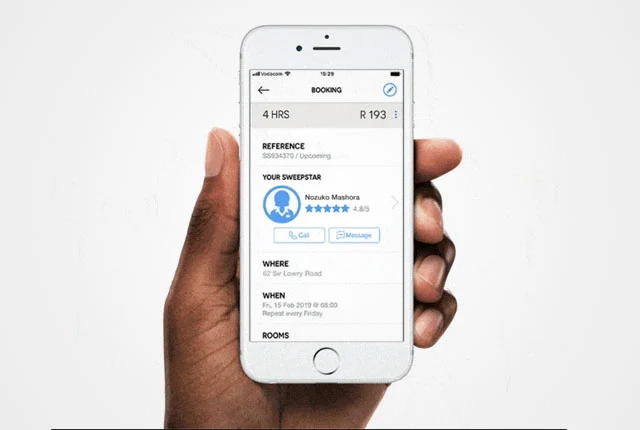
During that time, they created, designed, marketed and launched SweepSouth, a booking platform that quickly connects clients and domestic workers — including gardeners, child-care providers and cleaners.
As soon as Pandor and Alen thrashed themselves in the entrepreneurial jungle, they realized its nothing like the academic world. The early days of SweepSouth were fast paced and filled with uncertainty.

Pandor’s personal life took a hit too, because some family members and her friends just couldn’t understand why she would throw away her PhD and leave a well paying job over that idiotic idea of launching SweepSouth.
According to Pandor, she and her husband made mistakes in the beginning and looking back, they would probably do things much differently. Understanding the needs behind household purchases also features in OneCart’s platform story.
They went through what they deemed as “unnecessary personal discomfort” in starting their business, because initially they thought being an entrepreneur, was all about showing investors how hungry they were, and far they were willing to go to ensure their company became a success….
time and experience threw that theory out of the window.

The on-demand platform lists available domestic workers for clients to book, whereby SweepSouth takes a marginal commission from the transaction.
Like ehailing companies, the domestic workers are not directly employed by SweepSouth, they only use the platform to make bookings and arrangements.
The two went from working on their dining-room table – sitting all day and night, working on SweepSouth’s business plan – to going to a few domestic workers they were interviewing themselves.
During the early stages, the founders also did cleaning work themselves. That hands-on experience helped them understand the service they were trying to organise and the expectations of clients and workers. SweepSouth’s founder account of the company’s beginnings describes the sacrifices and service needs behind its launch.
Following its launch, the company attracted investment, tagging many investors along the way. So far, the Johannesburg based start-up has raised funds from these investors below:

It has connected thousands of domestic workers(termed SweepStars) with clients across Johannesburg, Durban, Cape Town and Pretoria.
Service prices and worker earnings vary with the booking and current arrangements. Check a current quotation and the applicable terms rather than rely on an old hourly rate or a fixed percentage in this founder story.

The founders’ account highlights the people behind the service as well as the technology. Avoid assuming every worker has the same household circumstances or earns a particular amount; actual work and earnings depend on bookings and terms.
SweepSouth’s beginnings show how a service problem became a booking platform. Staff counts, operating locations and expansion plans change over time and should be verified separately from this historical founder account. For a comparison in building a repeat-purchase household product, explore Rishav Juglall’s cleaning-products business.
ifc
irvinepartners
disruptngafrica
The service work behind SweepSouth's booking platform
SweepSouth's 2019 founder account explains its early sacrifices and attention to the people providing the service. That is a useful historical source, while present locations, worker arrangements and charges should be checked through current terms. Capital raised is not the same as revenue or a verified business valuation.
A booking platform coordinates more than an available time slot. Customers need a clear service scope, access arrangements and a route to resolve problems. Service providers need understandable booking and payment information. The technology is the interface to that operating relationship.
For a new service marketplace, measure completed bookings, cancellations, repeat use and support cost. A high number of registered providers does not establish that everyone receives regular work. Likewise, the customer's total payment is different from the platform's revenue and the provider's earnings.
The entrepreneurship lesson is to design both sides of the service. Recruitment, expectations, communication and exception handling need to work alongside customer acquisition. A useful digital platform solves the underlying coordination problem repeatedly rather than simply listing people online.
Source and further reading: The service work behind SweepSouth's booking platform — reference.


